

“I understand why you would want to do that”, David said. “But we won’t do that.”
It was an interesting opening to a discussion about potentially hiring him and his partner Charlie.
The topic at hand was flooring for the original house.
When we moved in, the original floors (pine) were painted in most rooms, with vinyl flooring in the kitchen. The painted floors were in fairly decent shape, save for the gouges and overall wear from 240+ years of service. Under the vinyl flooring, the origins floor was also there, but it was pretty trashed by the process of hacking down the floor to deal with a hump, adding leveling concrete, and installing a plywood subfloor.
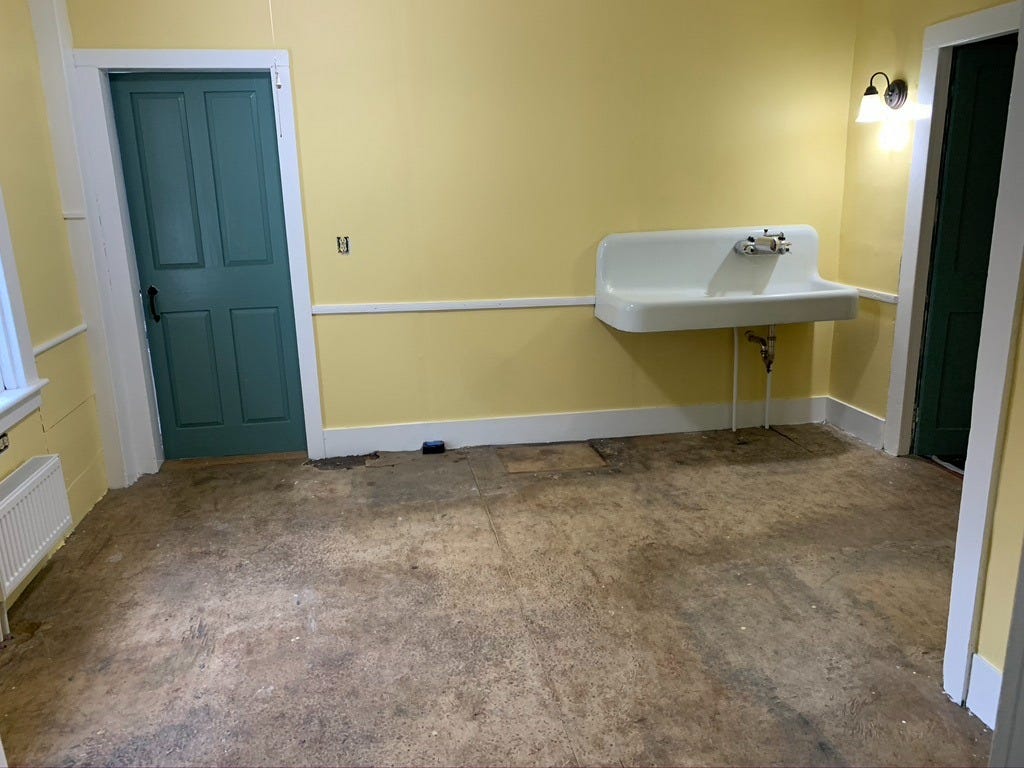
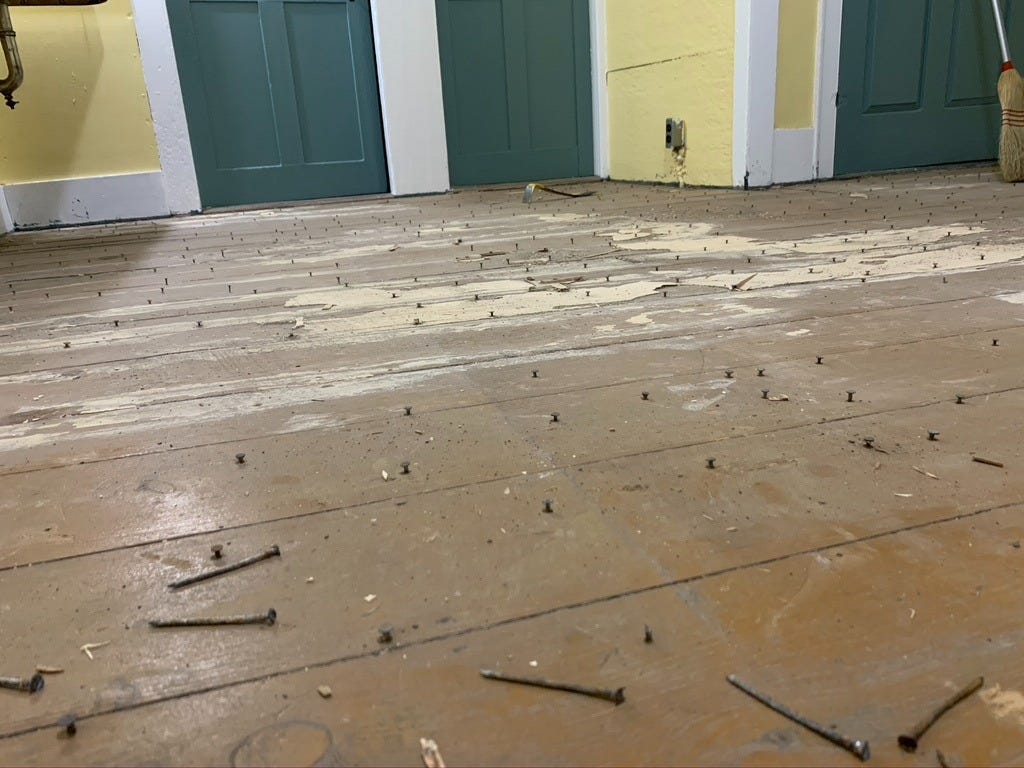
And throughout the original house there were “peaks and valleys” in the floor that came from centuries of settling, racking, and some rot.
Let’s just say, a marble placed on the floor at just about any spot would immediately start to roll, and not in a straight line for very long.
The plan had been to lay the new flooring right over the old wooden floors in the original house. I figured with a little bit of carpentry, we could smooth out the toughest spots, and the new floor could cover up the “wrinkles” that come with age.
One flooring professional I consulted with agreed it could be done, though I found him light on specifics.
David and Charlie, from Genuine Wood Floors, balked at that idea.
Their practical objection was that the “moving target” of a floor plane was going to be really hard to deal with just “a little bit of carpentry”. And not getting it right meant that the new flooring would inevitably pop nails, gap, and otherwise look terrible eventually. As Charlie put it, “We could make it look nice for a while…long enough to run away…and then you would be miserable as the floor started to adjust to the poor subfloor below. That is not how we work.”
Their objection as craftsmen was for another reason. Those old floors, which we saw as gouged, marred, uneven…they saw as beautiful. Or they saw that they had the opportunity to be beautiful. It is impossible to describe just how excited they were by the 240 year old pine flooring. They said the color of the wood would be rich. The grain patterns would be tight like we hardly see these days (as these were old growth trees). It would have character from the old nail holes, insect trails, and other charming imperfections. “And,” they said, “think of the sustainability benefits of using wood already in your house to make your floors!”
David and Charlie were talking aesthetic, performance, resource use and embodied carbon benefits. They knew their audience!
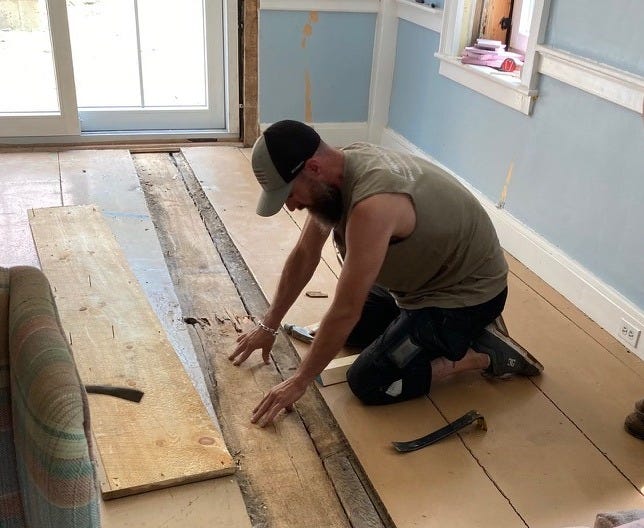
The clincher was when they took up an old floor board, flipped it over, sanded it, and put a little oil on it to mimic how they would recommend we finish these floors. The rough looking floor was transformed!
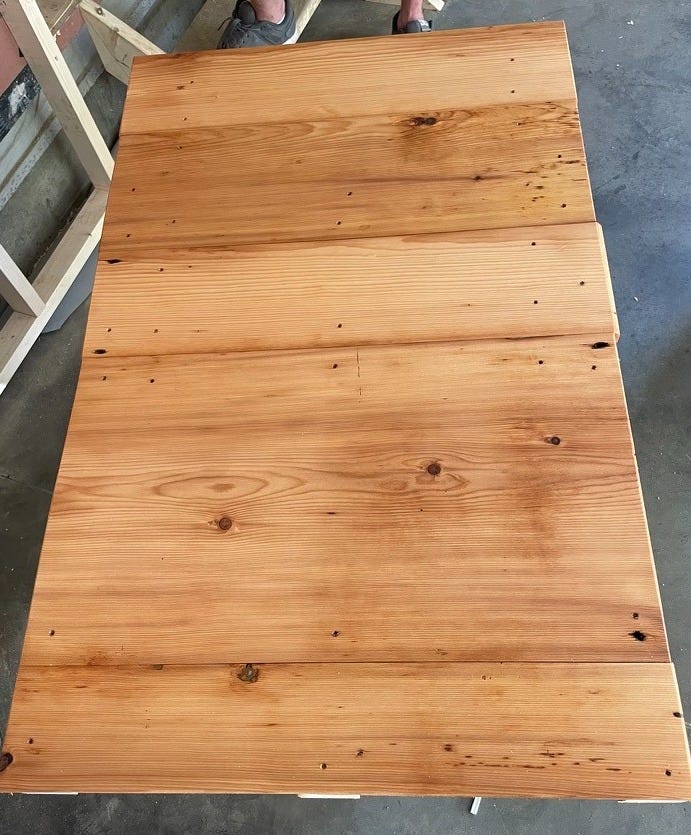
David then hit the old wood sample and a new white pine flooring sample with a hammer, using the same swing/force. Ever the scientist, I appreciated the controlled experiment. Lo and behold, the old flooring was much less prone to denting. A little research indicates that the more dense grain structure, crystallization of resins over time, and high heartwood content of old pine conveys this differential hardness.
We were sold.
So, the old floor was carefully taken up, and David and Charlie trailered it back to NH where they had the operation to safely plane down and square up the old wood flooring and get it ready for install. When the time was right, they did so. There was enough high quality recovered wood for the front hallway, expanded dining room, and new half bath in the original house. In the living room and den of the original house, David and Charlie installed new white pine boards. And in the new addition, they installed new white oak flooring1 (which had always been the agreed upon plan, with no pushback :) ).
We were beyond delighted by the results.
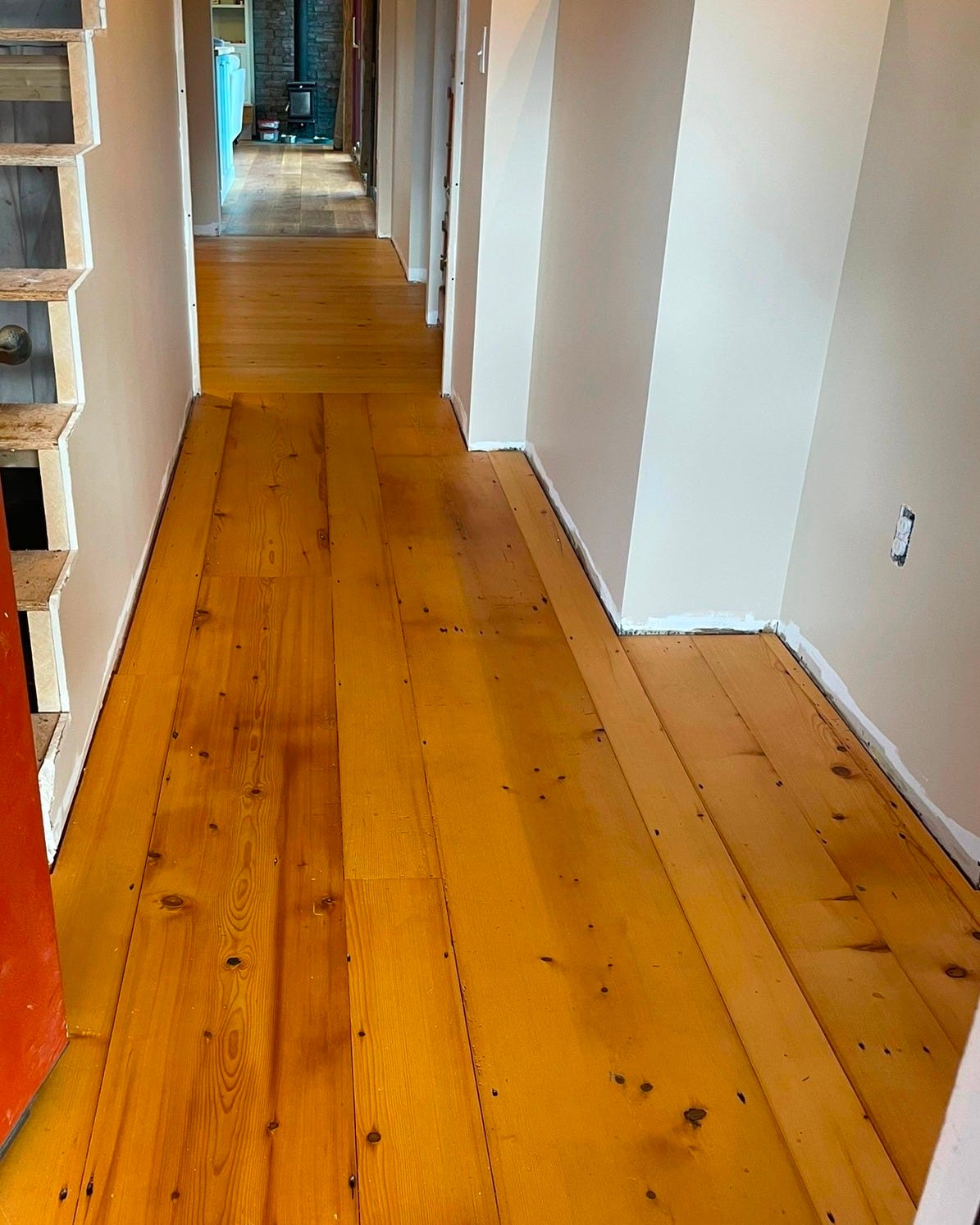
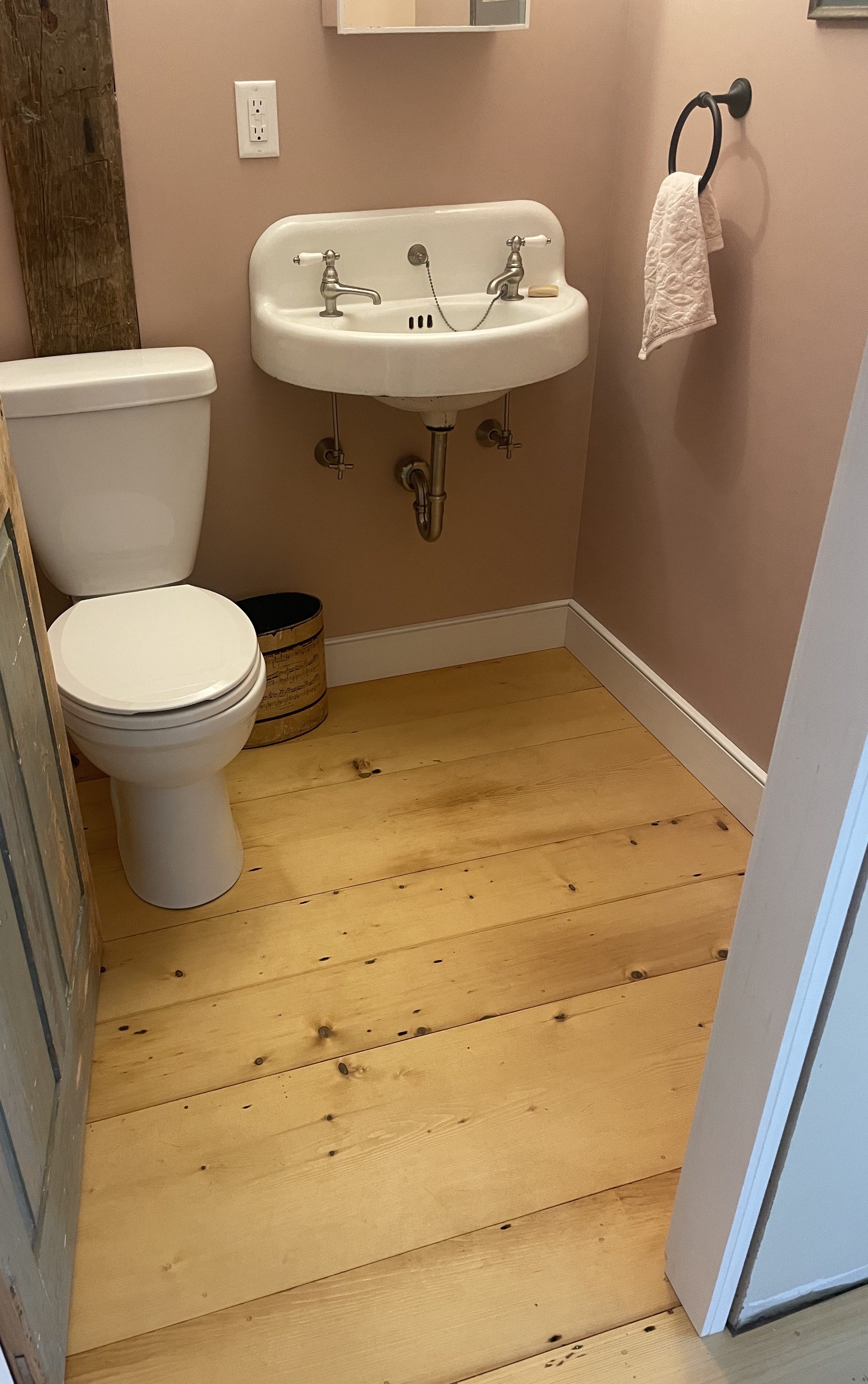
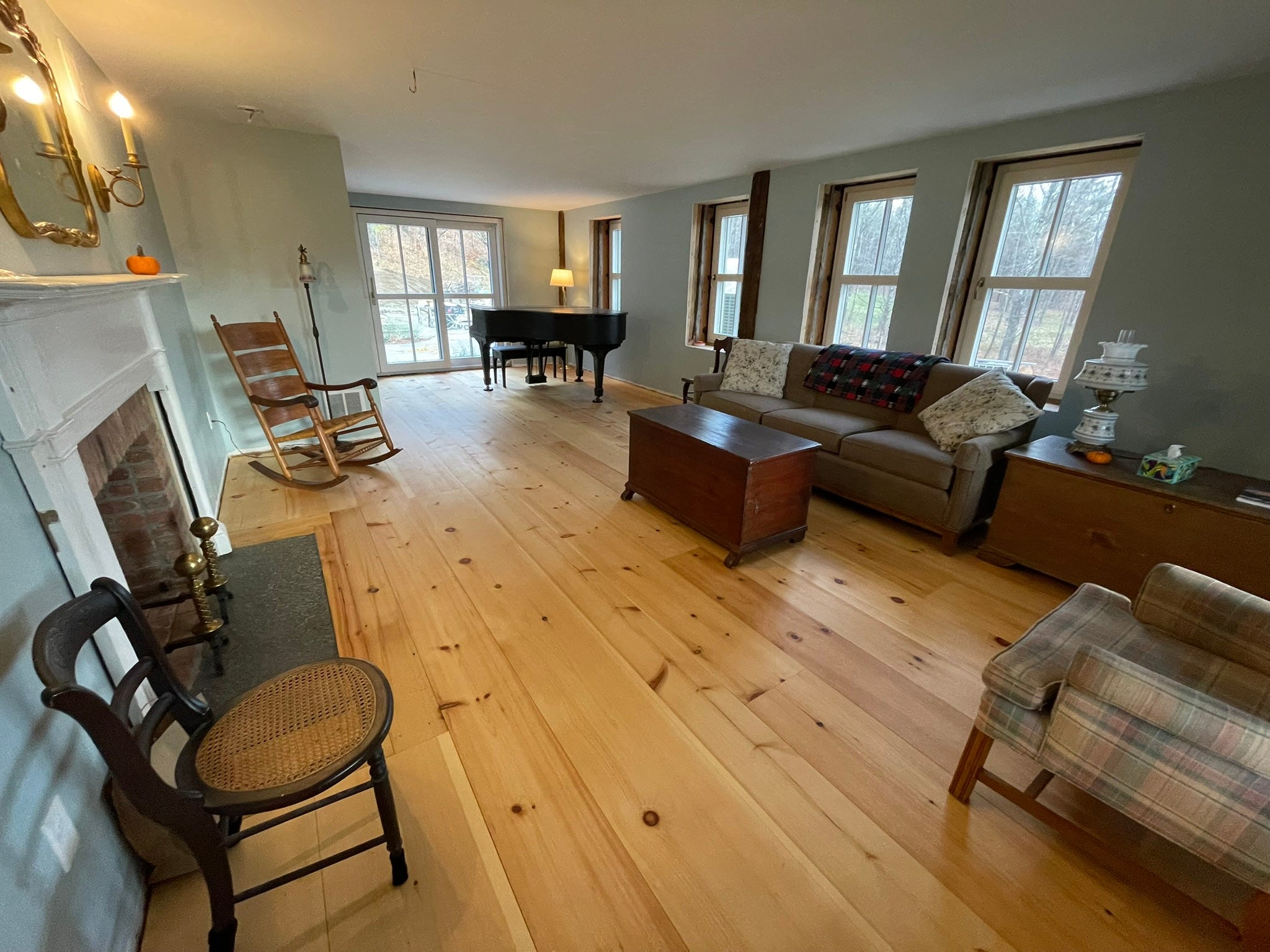
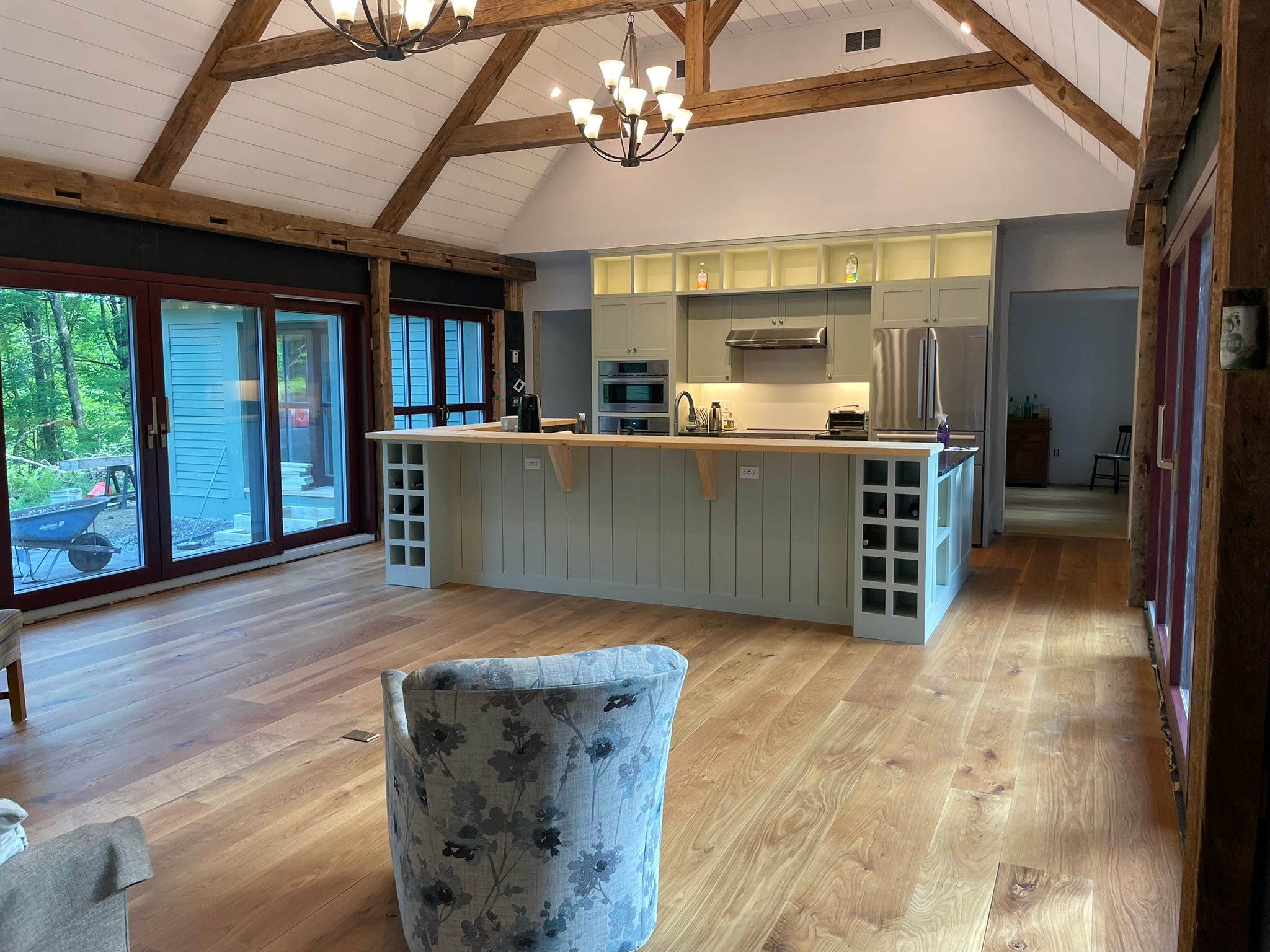
We are fortunate to have had great partners on this project from day one. People who are talented, care about quality, and are willing to share their experience and insights–including being willing and able to redirect a plan if they believe it will better serve the goals of a project. David and Charlie were just such partners, and we hope and expect that the craftsmanship of their work will last many generations. We’re delighted to have them as a part of the ongoing story of this home.
Finally, you may be wondering about how the subfloors of the original house were made ready for David and Charlie to come do their work.
That is Part 2. A story that starts with….“I understand why you would want to do that, but…..”
Little morsel: One goal of this build—this Green Dream—is to create a place in which we can create community, encourage connection to the living world, and be a place of respite and recharge. One way we try and live into this goal is to host Active Hope Climate Retreats. These 2 day retreats are designed to allow people who are experiencing anxiety about the climate crisis to self-author ways to get involved in creating the world they wish to see, tapping into their natural talents and activities that bring them joy. People deep in climate work also can use this as an opportunity for reframing and reenergizing. The format draws heavily from the wonderful work of Joanna Macy (and her book, Active Hope, co-authored with Chris Johnstone), and Ayana Elizabeth Johnson—and the natural landscapes around us here in VT. We hosted our third such retreat recently. This was the first in which we had a heating system, floors, multiple functioning bathrooms, and enough sleeping area in the house to accommodate all eight participants! Tents were an important part of the housing plan during earlier retreats–and while still a great choice in certain seasons, are now optional! You can read the reactions of one recent retreat participant here. We always come away energized and excited after having one of these retreats, and we look forward to more in 2026 and beyond!
We were originally told that wide plank flooring and radiant floor heat were incompatible. As Carlisle Wide Plank Floors (the source of our oak flooring) can attest, that is not true, per se. The details are important…as is having the right installer who pays attention to those details.
The floors look great in the photos, but I was lucky enough to see them in person and they are outstanding. What craftsmanship and true professionals to the craft.
The floors are so beautiful! And the story even more so.